
Founding Product Designer
Owned end-to-end product design, from strategy to user flows, interfaces, and a scalable design system.
Case study 01 · Arborloop AI-native · 0→1
Turned an early stage startup idea into a user-centred product experience, using AI as a research and design partner throughout the process.
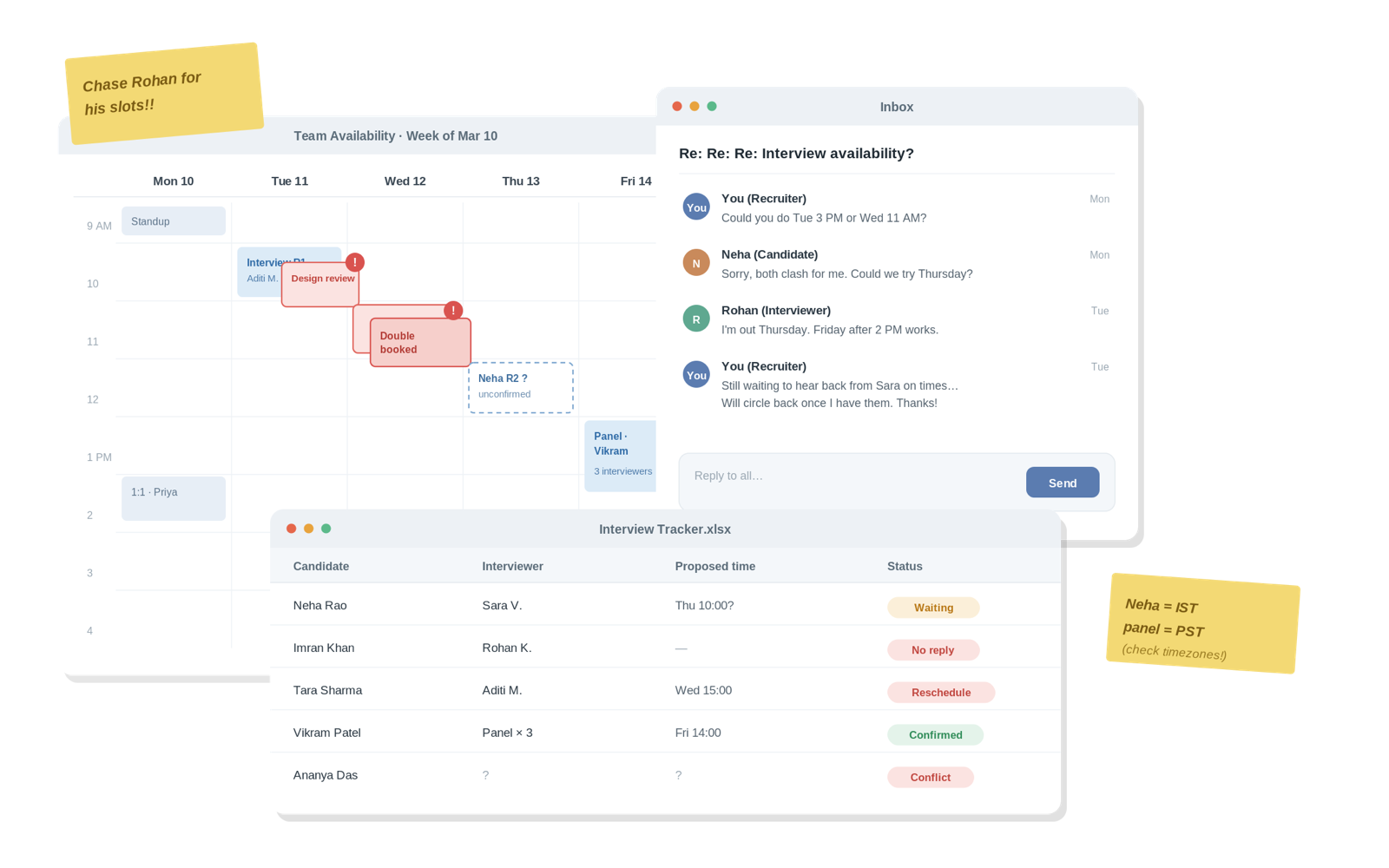
Owned end-to-end product design, from strategy to user flows, interfaces, and a scalable design system.
Worked directly with the founders and engineers to turn an early stage idea into a clear product vision and MVP direction.
I established the design foundations, explored user needs, and shaped the experience from scratch.
We had no existing product, no established user base, no design system, and no historical product data to learn from. As the only designer, I shaped the product experience from the ground up, from understanding the problem and defining user needs to designing the interface and collaborating on the MVP.
Instead of jumping straight into Figma, I focused on understanding the problem and our users. I followed the traditional UX process, using AI as a research and brainstorming partner to work faster, while keeping design decisions in my hands.
My first step was to sit down with the two stakeholders to understand their vision, business goals, and expectations. Instead of discussing features immediately, I focused on a few important questions:
These conversations helped us define our direction: reduce manual coordination while keeping AI transparent, predictable, and under the recruiter’s control.
Automate the repetitive work, not the recruiter’s judgment.
One of the biggest challenges was that we didn’t have active customers to research. And because Arborloop was a B2B product, I couldn’t assume that the person purchasing it would have the same needs as the person using it.
I started by mapping the different stakeholders involved in hiring, then used ChatGPT and Claude to explore synthetic stakeholder profiles, simulating potential goals, frustrations, and workflows across four perspectives:
I treated these AI-assisted stakeholder simulations as hypotheses rather than validated personas. I wanted to understand their potential responsibilities, goals and frustrations, and where their needs might conflict.
“How might we automate scheduling without making recruiters feel that they’ve lost control?”
I didn’t want the synthetic simulation to become our version of reality. Without an existing customer base, I turned to public recruiter and candidate communities, looking for detailed accounts of actual scheduling breakdowns rather than broad complaints about hiring.
Three publicly available discussions provided concrete starting points:
Each card opens the original Reddit thread. Individual posts are signals, not representative user research.
To balance individual stories with quantitative evidence, I studied Ashby’s Recruiting Coordination report, published on 22 October 2024. It analyses scheduling for more than 2.8 million candidates and 5.1 million interview events.
Rather than simply automating interview bookings, Arborloop could simplify complex scheduling workflows, enable candidate self-service, and give recruiters visibility and control over AI-generated schedules.
The bars above are redrawn from published figures rather than screenshots. View the original Ashby report, charts, definitions and methodology ↗
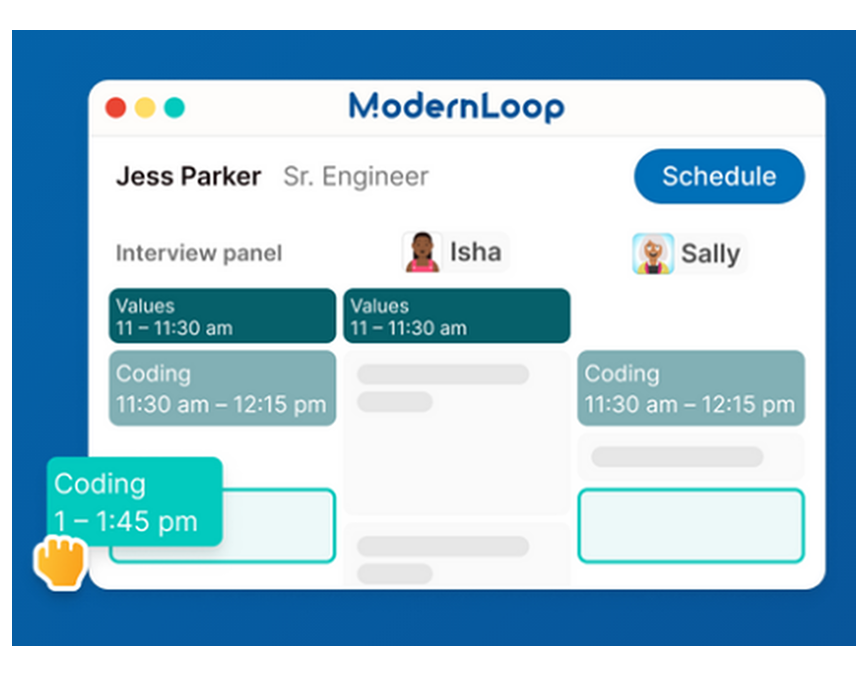
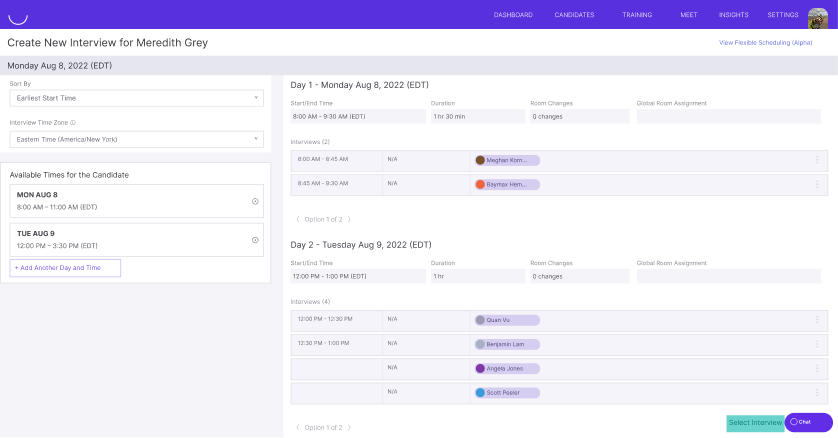
I used AI to speed up the first pass of competitive research, then verified claims against the companies’ own product and help documentation. I focused on ModernLoop, GoodTime and Calendly because they represent different ways to solve scheduling, from interview orchestration to flexible booking.
I consolidated my research findings, insights and supporting resources into a single document, then used ChatGPT to analyse and distil them into a handful of actionable insights.
I used these insights to guide my next steps, define the core problem, and prioritise features for the MVP.
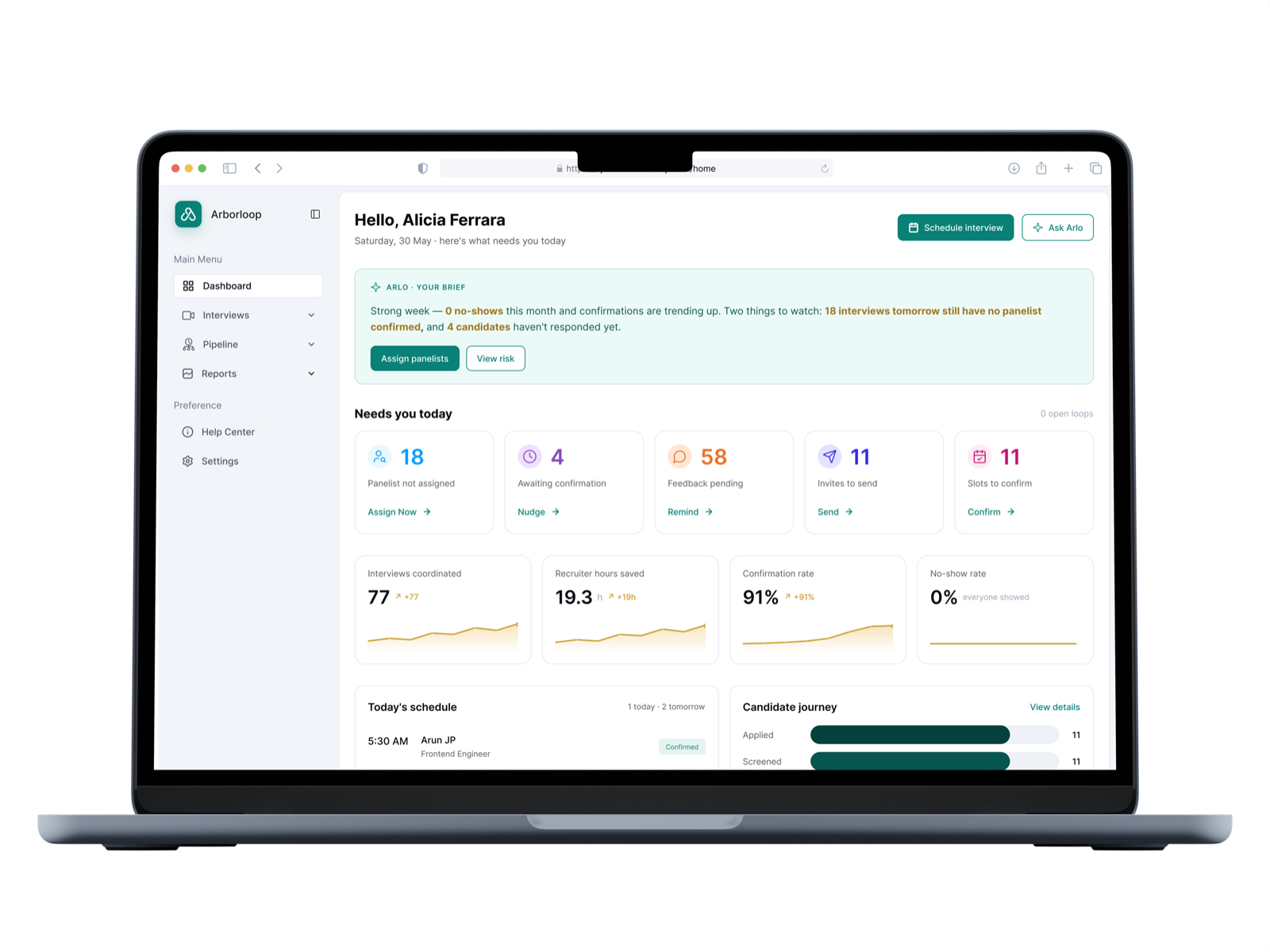
Explore the clickable prototype, or try the live product.
What’s next?